


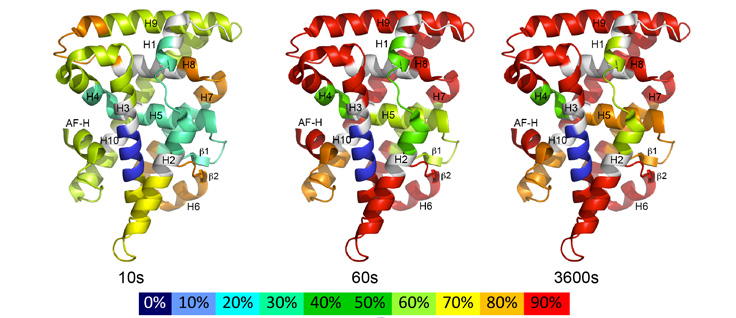
We seek to understand how molecular signals are recognized, how they control biological function, and how these mechanisms can be harnessed to discover new therapeutic strategies. Our research integrates four closely connected areas.
Molecular Sensing & Nuclear Receptors
We investigate how lipids, metabolites, and hormones regulate protein function and gene expression. A major focus is understanding how nuclear receptors and lipid-binding proteins sense changes in cellular metabolism and translate these signals into biological responses in health and disease.
Structural & Mechanistic Biology
We use structural biology, biochemistry, and biophysics to reveal how proteins recognize ligands, interact with regulatory partners, and change their activity. By connecting molecular structure with function, we seek to uncover mechanisms that explain biological behavior from the atomic to the cellular level.
Therapeutic Discovery
We translate mechanistic insights into new strategies for modulating proteins involved in metabolic and inflammatory disease. By identifying ligand-binding mechanisms and previously unrecognized opportunities for molecular intervention, we aim to bridge fundamental discovery with the development of new therapeutic approaches.
AI-Enabled Molecular Discovery
We combine structure prediction, molecular modeling, and experimental biology to discover molecular interactions that may be difficult to identify using conventional approaches alone. We use computation to generate testable hypotheses about protein-ligand recognition, molecular function, and therapeutic opportunities, and then challenge those predictions experimentally.